Thursday, February 6, 2014


Tuesday, July 2, 2013
Family Matters Especially when Caring for an Aging Parent.
"We are so thankful to Family Caregivers for the help they provided at such a difficult time. We could not have done it without them." Niven family
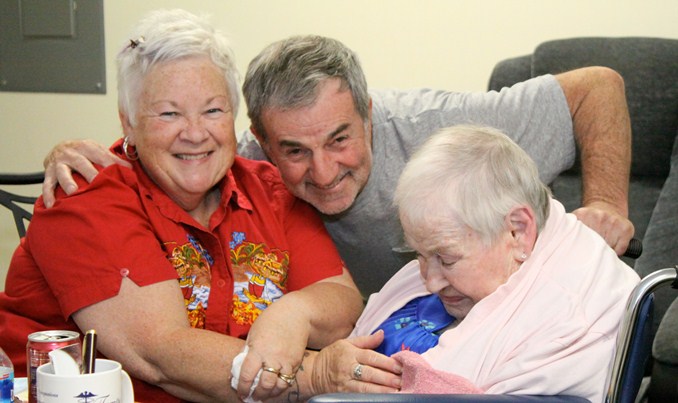
The American Association for Marriage and Family Therapy states that “more than ever
before, families are providing long-term care to older adults with limitations
in the ability to perform tasks necessary for independent living. Nearly 25% of
American households are providing care to people age 50 years and over.
Families are the alternative foundation for a stressed healthcare system.
Hospital stays are shorter than ever and family caregivers are often expected
to do what healthcare professionals once did.”
Family caregivers take over various responsibilities for
their elders. It may be just handling
finances, running errands, going to doctor appointments or taking on full 24
hour care services. In most cases one
sibling in the family will become the main caregiver, but most successful
ventures are supported by the entire family.
There is a saying that it takes a village to raise a
child. This may be true, but it takes a
family to care for an aging parent. As
seniors lose physical and cognitive function they become vulnerable and unable
to manage their own care. Who better to
know their needs and desires than their own children. Even if professional care givers are providing
services, family involvement makes the difference in quality of life for their
parents.
“If one family member has been designated caregiver other members
can give support with respite care, transportation to doctors, etc., everyone
needs to be aware of all that is needed and be in total agreement to do it”. “The 4 Steps of LongTerm Care Planning”
Experience has shown that even families that are close can
quickly grow angry, jealous and hostile towards each other when an aging parent
begins to need long term care. If a sibling moves into the parent’s home,
others can easily be suspicious of ulterior motives and fear to lose their
inheritance. On the other hand, the child doing the entire care taking becomes
bitter and feels there is no support or help from siblings.
One example of a
family misunderstanding is that of a brother accusing his sister of stealing
all of the money from the sale of his parent’s home.
Karen, who was a single mom with two children, moved in
with her parents when her father had a stroke to help her mother take care of
him. Her mother was also disabled. Needing money to pay for a home care
service, Karen helped her mother do a reverse mortgage on the home, which gave
the needed funds. If communication had been open and Karen’s brother had known
the need and been involved with his parents care, he would not have reacted so
negatively when he eventually found out about the reverse mortgage.
Every family is different. Some families are close and some
have never been compatible. If your communication is strained, consider having
a professional
mediator such as a Geriatric Care Manager or Professional Patient Care Advocate present at a family meeting. The mediator will be able to keep
things calm and running smoothly and help work out each persons concern.
Family matters. The
experience of working together for their parents care can give aging parents
and family members a peaceful, memorable experience. Call Family Caregivers Network 215-541-9030 or visit www.familycaregiversnetwork.com for more information or to schedule a visit by a Geriatric Care Manager or Professional Patient Advocate.
Article compliments of The National Care Planning Council which Family Caregivers Network is a member of. Multiple resource information available at Long Term Care Link.
Saturday, June 8, 2013
New Mobile GPS Medic Alert Systems are for aging individuals on the move.
Gerry Fioriglio RN, Owner of Family Caregivers Network
with Dene Liott live on "What's Happening"
Get Help wherever you are with the new Mobile Alert GPS system. Now you can go out and participate in all of your favorite activities - taking walks, gardening, lunching with friends or traveling - and still be able to get help in the event of a sudden fall or medical emergency. MobileAlert, the medical alarm service that uses GPS technology to follow you at home and on the go, ensures that professional help is your constant companion.
Did you know that
Check out the new technology today at "Medical Alert"
Thursday, November 1, 2012
Agressive Behavior in Patients with Dementia
There seems to be an increase in the amount of agressive behavior in patients with Dementia or Alzheimer's disease and families are struggling to understand how to deal with these behaviors. I usually hear families say "I don't know why my father is behaving like this he was never agressive". Families still don't understand Dementia let alone the serious issues of agressive behavior.
Why do some patient's with Dementia develop agressive behavior and other's don't? What causes this behavior? And what can be done to control this behavior? These are some of the most understood issues with this disease.
First families need to understand that it is not the person but the disease causing the agressive behavior. Usually this type of behavior occurs when the frontal lobe of the brain is affected by the disease Dementia. The frontal lobe is where a person's personality and behavior sit within the brain. Some people with dementia involving the frontal lobe undergo dramatic changes in their personality and become socially inappropriate, impulsive or emotionally indifferent, while others lose the ability to use and understand language. It is important to have your loved one evaluated by a Neurologist or Neuropsychiatrist who specializes in Dementia in adults. Once the right diagnosis is made then the patient can be treated appropriately and the family can be educated on what to expect with this very unpredictable illness.
The signs and symptoms of this disease often vary from patient to patient. It becomes progressively worse over time requiring 24 hour care. Most behavioral changes that a person exhibits are;
Increasingly inappropriate actions
Loss of empathy and other interpersonal skills
Lack of judgment and inhibition
Apathy
Repetitive compulsive behavior
A decline in personal hygiene
Changes in eating habits, predominantly overeating
Lack of awareness of thinking or behavioral changes
Sudden Agression
Behavior can change without any warning
Once a person has been appropriately diagnosed treatment usually begins with using Antidepressants. It is usually a long process to find the right combination of medications needed to manage the symptoms. Often Antipyschotic drugs are needed but they can have adverse affects that need to be closely monitored because of the increased mortality in the elderly.
The more that families understand about the illness they can better manage their own behavior around the person with the illness. Families and caregivers can reduce behavior problems by changing the way they interact with the person who has agressive behavior with dementia. Examples include:
Living with a person with Dementia or Alzheimer's disease is a 24 hour a day job. Caring for a person with Agressive behavior associated with the disease there just aren't enough hours in a day. So reach out to others for help. More more information on Agressive behavior contact us at Family Caregivers Network. We can direct you to the right help you need. For anyone who believes they can handle it by themselves or doesn't think it will ever get that bad read the attached article;
Allentown Police: 86-year-old man shot and killed son
Why do some patient's with Dementia develop agressive behavior and other's don't? What causes this behavior? And what can be done to control this behavior? These are some of the most understood issues with this disease.
First families need to understand that it is not the person but the disease causing the agressive behavior. Usually this type of behavior occurs when the frontal lobe of the brain is affected by the disease Dementia. The frontal lobe is where a person's personality and behavior sit within the brain. Some people with dementia involving the frontal lobe undergo dramatic changes in their personality and become socially inappropriate, impulsive or emotionally indifferent, while others lose the ability to use and understand language. It is important to have your loved one evaluated by a Neurologist or Neuropsychiatrist who specializes in Dementia in adults. Once the right diagnosis is made then the patient can be treated appropriately and the family can be educated on what to expect with this very unpredictable illness.
The signs and symptoms of this disease often vary from patient to patient. It becomes progressively worse over time requiring 24 hour care. Most behavioral changes that a person exhibits are;
Once a person has been appropriately diagnosed treatment usually begins with using Antidepressants. It is usually a long process to find the right combination of medications needed to manage the symptoms. Often Antipyschotic drugs are needed but they can have adverse affects that need to be closely monitored because of the increased mortality in the elderly.
The more that families understand about the illness they can better manage their own behavior around the person with the illness. Families and caregivers can reduce behavior problems by changing the way they interact with the person who has agressive behavior with dementia. Examples include:
- Avoiding events or activities that trigger the undesirable behavior (sometimes easier said than done).
- Anticipating needs and alleviating them promptly
- Maintaining a calm environment
- If the person is telling a story you know if not true don't try to correct them or tell them it is not true. Just listen and redirect the individual.
- Try to stick to routines.
- Never assume the individual will not exhibit a specific symptom, remember the behavior can happen without warning.
Living with a person with Dementia or Alzheimer's disease is a 24 hour a day job. Caring for a person with Agressive behavior associated with the disease there just aren't enough hours in a day. So reach out to others for help. More more information on Agressive behavior contact us at Family Caregivers Network. We can direct you to the right help you need. For anyone who believes they can handle it by themselves or doesn't think it will ever get that bad read the attached article;
Allentown Police: 86-year-old man shot and killed son
Tuesday, September 4, 2012
Anyone who has a loved one with Alzheimer's disease should watch this video. We all wonder what happens to the brain and if there is anything more that can be done. This video explains in simple terms what Alzheimer's Disease does to the brain ... everyone can have a better understanding of this disease and the impact on families. Share this video with your friends and anyone you know that could benefit from the information. For more information on how to care for a loved one with Alzheimer's disease contact Family Caregivers Network.

Thursday, July 19, 2012
Caregiving echos uncertainty and stress
Change; whether change is positive or negative the emotions
it echoes is uncertainty and stress.
When we talk about caregiving stress and uncertainty are the
emotions that family members experience.
Their life has changed by taking on the role of caregiver. The uncertainty of the future and the stress of their daily activities
causes issues like eating disorders, lack of sleep, and medical problems like
high blood pressure. When you ask
family caregivers how caregiving makes them feel, most say
depressed. Depression is the result of
the stress and uncertainty of their particular situation. They feel alone and without answers.
That is why it is so important for family members to attend
support groups. Support groups offer the
comfort of knowing you are not alone and that others feel the same way. Support group members provide guidance to
each other with instruction tips of how to care for loved ones.
Suggestions of what works for one may help another caregiver’s
situation.
Family Caregivers Network offers Caregiver
Support Groups to family caregivers. Our initial
support group has been running for 12 years.
Held in Quakertown, Independence Court an Assisted Living Facility hosts
our meeting on the last Thursday of the month at 6pm. A second Caregiver Support Group is held the second Thursday of the month at our office in Pennsburg.
Tell your friends, neighbors, or loved ones who are caregivers about these Support Groups and encourage them to attend. Call Family Caregivers Network, 1-866-539-7515 to attend one of our meetings. If you live out of the area you can easily find a Caregiver Support Group near you. Call your local "Office on Aging" or "Children of Aging Parents" , 1-800-227-7294 to find out more about Support Groups.
Remember...
“Your life does not get better by chance, it gets better by
change. Fear, uncertainty and
discomfort are your compasses toward growth.”
Tuesday, July 10, 2012
How to Reduce Medication Errors
The study found even highly educated patients made serious medication errors, as did patients who were given guidance and individualized instructions by a pharmacist, according to MedPage Today. Patients who received a follow-up phone call from their physicians post-discharge didn't reduce the number of mistakes, the data showed. Despite intervention by pharmacists and medical staff, these frequent errors are cause for concern.
There needs to be better supervision and management of medications in patients, especially older patients. New automated medication systems have ensured better compliance with medication administration with less errors. The Lifeline Personal Medication Dispenser does just that, http://www.managemypills.com/content/Who_Needs_PMD
Seniors rely on their medications to keep them healthy, but complex medication schedules can lead to mistakes: missing doses, taking incorrect amounts, or taking medicines at the wrong times. These mistakes could lead to unnecessary doctor or hospital visits, illness and even death.
- For seniors, approximately 1 out of 10 hospital admissions are the result of the incorrect use of medications.*
- Not taking medications correctly can have serious consequences, including increased discomfort, inadequate disease prevention and possibly even death.**
- Lifeline is the only service with a 98.6 % dispensing adherence, among monitored subscribers.
Friday, May 25, 2012
Heat Safety Awareness Day May 25, 2012
The Hazards of Excessive Heat
When the body heats too quickly to cool itself safely, or when you lose too much fluid or salt through dehydration or sweating, your body temperature rises and heat-related illness may develop. Heat disorders share one common feature: the individual has been in the heat too long or exercised too much for his or her age and physical condition.Studies indicate that, other things being equal, the severity of heat disorders tends to increase with age. Conditions that cause heat cramps in a 17-year-old may result in heat exhaustion in someone 40 years old, and in heat stroke in a person over 60. Sunburn, with its ultraviolet radiation burns, can significantly retard the skin's ability to shed excess heat. Acclimatization has to do with adjusting sweat-salt concentrations, among other things. The idea is to lose enough water to regulate body temperature, with the least possible chemical disturbance--salt depletion.
The atmosphere and the windows of a car are relatively transparent to the sun’s shortwave radiation (yellow in figure below) and are warmed little. This shortwave energy, however, does heat objects it strikes. For example, a dark dashboard or seat can easily reach temperatures in the range of 180°F to more than 200°F. These objects, e.g., dashboard, steering wheel, childseat, heat the adjacent air by conduction and convection and give off longwave radiation (infrared), which efficiently warms the air trapped inside a vehicle.
Heat Safety
Child Safety Tips
- Make sure your child's safety seat and safety belt buckles aren't too hot before securing your child in a safety restraint system, especially when your car has been parked in the heat.
- Never leave your child unattended in a vehicle, even with the windows down.
- Teach children not to play in, on, or around cars.
- Always lock car doors and trunks--even at home--and keep keys out of children's reach.
- Always make sure all children have left the car when you reach your destination. Don't leave sleeping infants in the car ever!
Adult Heat Wave Safety Tips
- Slow down. Reduce, eliminate or reschedule strenuous activities until the coolest time of the day. Children, seniors and anyone with health problems should stay in the coolest available place, not necessarily indoors.
- Dress for summer. Wear lightweight, light-colored clothing to reflect heat and sunlight.
- Put less fuel on your inner fires. Foods, like meat and other proteins that increase metabolic heat production also increase water loss.
- Drink plenty of water, non-alcoholic and decaffeinated fluids. Your body needs water to keep cool. Drink plenty of fluids even if you don't feel thirsty. Persons who have epilepsy or heart, kidney or liver disease, are on fluid restrictive diets or have a problem with fluid retention should consult a physician before increasing their consumption of fluids. Do not drink alcoholic beverages and limit caffeinated beverages.
- During excessive heat periods, spend more time in air-conditioned places. Air conditioning in homes and other buildings markedly reduces danger from the heat. If you cannot afford an air conditioner, go to a library, store or other location with air conditioning for part of the day.
- Don't get too much sun. Sunburn reduces your body's ability to dissipate heat.
- Do not take salt tablets unless specified by a physician.
SUNBURN: Redness and pain. In severe cases swelling of skin, blisters, fever, headaches. First Aid: Ointments for mild cases if blisters appear and do not break. If breaking occurs, apply dry sterile dressing. Serious, extensive cases should be seen by physician.

HEAT CRAMPS: Painful spasms usually in the muscles of legs and abdomen with heavy sweating. First Aid: Firm pressure on cramping muscles or gentle massage to relieve spasm. Give sips of water. If nausea occurs, discontinue water.
HEAT EXHAUSTION: Heavy sweating; weakness; cold, pale, clammy skin; thready pulse; fainting and vomiting but may have normal temperature. First Aid: Get victim out of sun. Once inside, the person should lay down and loosen his or her clothing. Apply cool, wet cloths. Fan or move victim to air conditioned room. Offer sips of water. If nausea occurs, discontinue water. If vomiting continues, seek immediate medical attention.
HEAT STROKE (or sunstroke): High body temperature (106° F or higher), hot dry skin, rapid and strong pulse, possible unconsciousness. First Aid: HEAT STROKE IS A SEVERE MEDICAL EMERGENCY. SUMMON EMERGENCY MEDICAL ASSISTANCE OR GET THE VICTIM TO A HOSPITAL IMMEDIATELY. DELAY CAN BE FATAL. While waiting for emergency assistance, move the victim to a cooler environment reduce body temperature with cold bath or sponging. Use extreme caution. Remove clothing, use fans and air conditioners. If temperature rises again, repeat process. Do NOT give fluids. Persons on salt restrictive diets should consult a physician before increasing their salt intake.
Heat Stress in the Elderly
- Elderly people do not adjust as well as young people to sudden changes in temperature.
- They are more likely to have a chronic medical condition that changes normal body responses to heat.
- They are more likely to take prescription medicines that impair the body's ability to regulate its temperature or that inhibit perspiration.
Heat Stroke
Signs and Symptoms of Heat Stroke
- An extremely high body temperature (above 103°F)
- Red, hot, and dry skin (no sweating)
- Rapid, strong pulse
- Throbbing headache
- Dizziness
- Nausea
Tuesday, May 15, 2012

May is Older Americans Month, a perfect opportunity to show our appreciation for the older adults in our community. Since 1963, communities across the nation have joined in the annual commemoration of Older Americans Month—a proud tradition that shows our nation’s commitment to celebrating the contributions and achievements of older Americans.
The theme for Older Americans Month 2012—Never Too Old to Play!—puts a spotlight on the important role older adults play in sharing their experience, wisdom, and understanding, and passing on that knowledge to other generations in a variety of significant ways. This year’s celebrations will recognize the value that older adults continue to bring to our communities through spirited participation in social and faith groups, service organizations, and other activities. As large numbers of baby-boomers reach retirement age, many communities have increased their efforts to provide meaningful opportunities for older adults—many of whom remain physically and socially active through their 80s and beyond. Current trends show that people over age 60 account for an ever-growing percentage of participants in community service positions, faith-based organizations, online social networking as well as arts and recreational groups.
Family Caregivers Network is joining in the national celebration of Older Americans Month 2012 with activities and events to promote intergenerational engagement and recreation. We invite you to join in the fun! To find out how you can support Older Americans Month 2012, contact Family Caregivers Network.
Friday, March 4, 2011
March is National Nutrition Month: Learn How Home Care in Montgomery County PA Can Help
March is National Nutrition Month: Learn How Home Care Can Help!
The key to a long, healthy life includes eating a wide variety of foods including nuts, fruits, grains, vegetables, and lean meats. This is even more important as we get older and our nutritional needs begin to change.
This year, March is National Nutrition Month, an awareness-raising campaign sponsored by the American Dietetic Association to help people plan their diets in order to support a long and healthy life.
This year’s theme is "Eating Right with Color," and the goals of the program are to teach people of all ages how to stay healthy and fit. This information can be useful in a number of contexts, including home care for seniors. Often, seniors receive assistance from elder care professionals who may be responsible for doing their grocery shopping, cooking, or meal planning. This is an important job for any caregiver, and so it is vitally important to understand how to promote healthy eating for older people. Many caregivers who work with elderly individuals say that they spend a considerable amount of time grocery shopping, cooking meals, or planning meals for their patients. This is important because it gives the caregiver an opportunity to help their patient find foods that are going to be nutritious. There can be a couple of obstacles to this, however. Some seniors regularly take several prescription medications that may interfere with the foods that they can eat. Others may have some kind of health problems that can restrict their diet. When hiring a home care professional, make sure they are aware of any restricted food items so these are avoided when planning meals.
As people grow older, their nutritional needs change, and many older people do not receive the proper amount of certain nutrients, such as calcium and Vitamin B, Vitamin B12, fiber, potassium, and others. These nutrients are important for helping maintain the bones and organs in old age. Many of these important vitamins and minerals are found in fortified cereals, fresh fruits, vegetables, milk, yogurt, and grains.
As people grow older, their nutritional needs change, and many older people do not receive the proper amount of certain nutrients, such as calcium and Vitamin B, Vitamin B12, fiber, potassium, and others. These nutrients are important for helping maintain the bones and organs in old age. Many of these important vitamins and minerals are found in fortified cereals, fresh fruits, vegetables, milk, yogurt, and grains.
By working with a home care agency, you can rest assured that the foods provided for your loved one are both high in nutritional content as well as accommodating to their dietary needs. The caregivers will know which foods to avoid when grocery shopping and will be aware of any dietary restrictions or possible complications with medicines. Professional caregivers are well-trained to be able to identify ingredients in medicines that may interact with food products and adjust their menus accordingly. Caregivers are also trained to know which nutrients are more important for men and women as they age. While both groups have less of an appetite as they get older, their nutritional needs are slightly different. Men should consume more potassium and fibers, whereas women need more Vitamin B12 zinc. Both men and women should increase their daily amounts of Calcium and Vitamin D. This is something that caregivers understand well, and they have the skills they need to properly care for your loved ones as they grow older.
This March, show your support of National Nutrition Month and consider hiring a professional caregiver for your loved one. By doing so, you will ensure that your loved ones are receiving the best possible care that caters to their special needs. All caregivers provide customized care for each patient to see that they receive the best care possible. Healthy eating is important for all people, and proper nutrition becomes even more important as we age. Consider hiring a professional elder care agency to care for your loved ones to be sure that they remain healthy and happy for many years to come.
This March, show your support of National Nutrition Month and consider hiring a professional caregiver for your loved one. By doing so, you will ensure that your loved ones are receiving the best possible care that caters to their special needs. All caregivers provide customized care for each patient to see that they receive the best care possible. Healthy eating is important for all people, and proper nutrition becomes even more important as we age. Consider hiring a professional elder care agency to care for your loved ones to be sure that they remain healthy and happy for many years to come.
Friday, February 25, 2011
Home Care Services In Montgomery County PA Can Beat Caregiver Stress
Home Care Services In Montgomery County PA Can Beat Caregiver Stress
A person who volunteers to be the live-in care provider for a family member runs the risk of encountering severe stress or burnout. Assuming the responsibility of providing elder care for a person who, due to physical or mental deterioration, can no longer live independently is very noble and can enrich the lives of both people involved; if respite care is not set in place, however, the living situation can become seemingly impossible.
The positive feelings that come from providing live-in care to a loved one can, unfortunately, become overshadowed by negative feelings. The stresses of being responsible for the care of another can result in feelings of anxiety, isolation, frustration and fear. In addition to the emotional impact, there is often an impact on the physical health of the elder care provider: The care provider often neglects their own health in favor of the needs of the recipient of their care. When the combination of emotional and physical impact goes unrelieved there are further complications for the care provider in the form of depression and feelings of inadequacy and failure based on their, self-perceived, inability to cope.
This is why there is a need for respite care. The person providing care is given a break from the amount of responsibility while knowing that the safety and well being of the person needing care are guaranteed. There are three basic types of respite available, each suited to different levels of need.
Adult Day Centers offer a community center setting. These centers often provide various programs, entertainment and socialization opportunities for the older person, yet still provide security in the form of experienced personnel to provide different levels of assistance. The majority of centers accommodate a range of participation from all-day, everyday visitors to those who only spend an hour at the center as they feel like it.
In-Home Care Services bring an experienced home care professional into the residence. The hours are more flexible than those of adult day centers and often of longer duration. In-home care professionals can be employed to watch for the person unable to live independently if the primary care provider has an outside job, if the provider of elder care simply needs an hour away for a break from daily concerns, or for an entire weekend when the caregiver needs to travel.
Assisted Living Respite Care can sometimes be found at assisted living homes, when space allows. For any number of reasons the caregiver may find themselves in a position of needing to find temporary care for an extended period of time, and no better aid can be found than in a facility that exists as a permanent residence for others that require assisted living.
The primary home care provider may initially be hesitant to use respite, but soon finds that taking short breaks from stress to focus on their own needs, both physical and mental, leaves them better able to care for their loved one. The previous negative emotions become, instead, an overall feeling of rejuvenation that leads to a happier relationship between the care giver and the care recipient.
For more information about home care in Montgomery County PA, contact the caregivers at Family Caregivers, we are a home care agency providing quality in home care and assistance to seniors in our community.
A person who volunteers to be the live-in care provider for a family member runs the risk of encountering severe stress or burnout. Assuming the responsibility of providing elder care for a person who, due to physical or mental deterioration, can no longer live independently is very noble and can enrich the lives of both people involved; if respite care is not set in place, however, the living situation can become seemingly impossible.
The positive feelings that come from providing live-in care to a loved one can, unfortunately, become overshadowed by negative feelings. The stresses of being responsible for the care of another can result in feelings of anxiety, isolation, frustration and fear. In addition to the emotional impact, there is often an impact on the physical health of the elder care provider: The care provider often neglects their own health in favor of the needs of the recipient of their care. When the combination of emotional and physical impact goes unrelieved there are further complications for the care provider in the form of depression and feelings of inadequacy and failure based on their, self-perceived, inability to cope.
This is why there is a need for respite care. The person providing care is given a break from the amount of responsibility while knowing that the safety and well being of the person needing care are guaranteed. There are three basic types of respite available, each suited to different levels of need.
Adult Day Centers offer a community center setting. These centers often provide various programs, entertainment and socialization opportunities for the older person, yet still provide security in the form of experienced personnel to provide different levels of assistance. The majority of centers accommodate a range of participation from all-day, everyday visitors to those who only spend an hour at the center as they feel like it.
In-Home Care Services bring an experienced home care professional into the residence. The hours are more flexible than those of adult day centers and often of longer duration. In-home care professionals can be employed to watch for the person unable to live independently if the primary care provider has an outside job, if the provider of elder care simply needs an hour away for a break from daily concerns, or for an entire weekend when the caregiver needs to travel.
Assisted Living Respite Care can sometimes be found at assisted living homes, when space allows. For any number of reasons the caregiver may find themselves in a position of needing to find temporary care for an extended period of time, and no better aid can be found than in a facility that exists as a permanent residence for others that require assisted living.
The primary home care provider may initially be hesitant to use respite, but soon finds that taking short breaks from stress to focus on their own needs, both physical and mental, leaves them better able to care for their loved one. The previous negative emotions become, instead, an overall feeling of rejuvenation that leads to a happier relationship between the care giver and the care recipient.
For more information about home care in Montgomery County PA, contact the caregivers at Family Caregivers, we are a home care agency providing quality in home care and assistance to seniors in our community.
Friday, February 18, 2011
Baby Boomers’ Eldercare Wake-up Call in Montgomery County PA
Baby Boomers’ Eldercare Wake-up Call
There are approximately 78 million reasons for boomers to jump on the long-term care strategic thinking, planning and executing bandwagon. According to the U.S. Census Bureau report in 2009, boomers were 78 million strong based on the 2006 census.
The staggering number of aging boomers in America serves as a wake-up call to boomers to start planning for our elder care needs. We’re only more than a decade late. How’s that timeline for urgency, my fellow boomers? Our millennial wake-up call is more urgent if any of the following scenarios are sound bytes from your life.
With 78 million aging boomer cohorts and 65 million caregivers in the U.S., you are part of a supportive community. Recognizing eldercare’s red flags is one way to achieve confidence that propels you to reach out to healthcare and eldercare professionals for help. Involve your parents and siblings in decisions.
You’re not alone. It’s a family affair.
Family Caregiver Network caregivers can help your family with all of your home care needs. We are a home care agency providing affordable in home care in Montgomery County PA.
There are approximately 78 million reasons for boomers to jump on the long-term care strategic thinking, planning and executing bandwagon. According to the U.S. Census Bureau report in 2009, boomers were 78 million strong based on the 2006 census.
The staggering number of aging boomers in America serves as a wake-up call to boomers to start planning for our elder care needs. We’re only more than a decade late. How’s that timeline for urgency, my fellow boomers? Our millennial wake-up call is more urgent if any of the following scenarios are sound bytes from your life.
- Long-Term Care (LTC) Insurance: If you are familiar with LTC insurance, you get an “E,” for effort, as my octogenarian mother occasionally said about a few of her former elementary school students who didn’t quite make the grade in reading, writing, or arithmetic. If you have LTC insurance, you’re barely passing with a C-. LTC coverage is a sound baby step, though maybe not for everyone.
- Childbearing Profile: You are single and childless. While having grown children is no guarantee of having at least 1 trustworthy LTC gatekeeper in your golden years, being a parent of an adult child may yield elder care dividends down the road.
- Health: You have been medically diagnosed with at least one chronic medical condition.
- Family Medical History: You have a family history of heart disease, stroke, high blood pressure, and certain types of cancer and/or diabetes. As is said in Spanish, “¡Ojo!” (Translation: Keep an eye on that!)
- Relationships in Your Family: Some families can’t wait to get as far away from each other as possible as members age. If your family’s relationships are strained, don’t count on family support in your golden years. Some caregivers could tell you stories about dysfunctional family relationships that erupt in nasty feuds when aging family members need long-term assistive care. Who are your family allies? Do you know? You should. One day in the not too distant future, your daily eldercare may depend on a family member. If that day comes, your primary (family) caregiver should be your elder care advocate.
- Home Upkeep: If you are a homeowner, you know that appliances and various parts of your home eventually will need repairs. Physically, mentally, emotionally, and financially, will you be prepared, and able, to keep up with increasing demands of homeownership as you advance in years?
- Family’s Go-To Contact? Your parents are older and/or starting to show signs of age-related or chronic disease health decline. You volunteered, or, Dad asked you for help with mowing the lawn after his heart attack scare. Your sibling who lives closer to your parents than you do has been calling you to vent about “little things” around your aging parents.
- Sibling(s) Lives Closer to Your Elderly Parents: You’ve long assumed that your sibling was merely venting with those telephone calls about your parents. You never gave the conversations a second thought. Your sibling takes care of helping your parents and lives within 15-minutes of your parents’ home.
- Financially Tangled Elder Web: You feel blindsided when you inadvertently discover that your parents have not paid their (property) taxes for more than a year now. Then, you discover unopened and unpaid bills in your parents’ home. How, and when, did your parents’ financial affairs get so out of hand?
- Your Emotional Roller Coaster: You wonder what you may have missed and decide that the whole mess is your sibling’s fault. You had nothing to do with this. You have no idea what to do, or, where to begin. You have your own life, marriage or divorce, relationship woes, job demands, financial challenges, adult child(ren) who just moved back into your home in a dismal economy, mounting debt, and more drama. You’ll help your parents because no one else in your family seems to care.
- Stress: Your anger mounts. You’re depressed. You stop talking to your sibling(s). You argue with your parents.
With 78 million aging boomer cohorts and 65 million caregivers in the U.S., you are part of a supportive community. Recognizing eldercare’s red flags is one way to achieve confidence that propels you to reach out to healthcare and eldercare professionals for help. Involve your parents and siblings in decisions.
You’re not alone. It’s a family affair.
Family Caregiver Network caregivers can help your family with all of your home care needs. We are a home care agency providing affordable in home care in Montgomery County PA.
Monday, February 14, 2011
Senior Care Montgomery County PA: Happy (Or Not So Happy?) 65th Birthdays
Happy (Or Not So Happy?) 65th Birthdays – The Baby Boom Generation Hits Retirement Age
People celebrating their 65th birthday today were born 9 months after Victory in Europe Day. Their arrival marked what some consider the very beginning of the Baby Boom Generation, which (at least in the Western World) enjoyed economic abundance, rock and roll, and long life expectancy.
Many wonder, however, whether the “Golden Years” are really going to be all that golden–not only for them, but for everyone else. Experts warn that many “Baby Boomers” are alarmingly short on savings, saddled with debt, and in poor health. The questions being asked are: Who’s going to pay the bill? And how will the aging of this generation affect the social landscape?
source: wikihow.com
The caregivers at Family Caregivers are here to answer all of your elder care questions. We are a home care agency providing quality and affordable home care in Montgomery County PA.
People celebrating their 65th birthday today were born 9 months after Victory in Europe Day. Their arrival marked what some consider the very beginning of the Baby Boom Generation, which (at least in the Western World) enjoyed economic abundance, rock and roll, and long life expectancy.
Many wonder, however, whether the “Golden Years” are really going to be all that golden–not only for them, but for everyone else. Experts warn that many “Baby Boomers” are alarmingly short on savings, saddled with debt, and in poor health. The questions being asked are: Who’s going to pay the bill? And how will the aging of this generation affect the social landscape?
source: wikihow.com
The caregivers at Family Caregivers are here to answer all of your elder care questions. We are a home care agency providing quality and affordable home care in Montgomery County PA.
Monday, February 7, 2011
February is American Heart Month
February is American Heart Month
Heart health is an area of grave concern among healthcare professionals, policy makers and the government. Heart disease has killed more Americans than any other diseases or chronic illnesses. It is the leading cause of death among patients of all race, gender and age. About 785,000 patients in the nation suffer their first heart attack every year and 470,000 of them have recurring heart attacks in a year. It has been estimated that heart attack affects one patient in every 34 seconds in America, costing a whopping healthcare bill of $316.4 billion a year. The risks of heart disease also dramatically increases with age affecting one in every five women above the age of 65 as compared to one in every 10 women between ages 45 and 65.
For 37 years, the American Heart Association tirelessly organized and campaigned for the fight against heart disease. February is the ‘American Heart Month’ where efforts are spent to increase awareness and raise funds for research and education on heart disease.
Heart disease is a lifestyle-related condition. Risk factors that can lead to heart disease or stroke are physical inactivity, obesity, high blood pressure, high cholesterol, smoking, diabetes and alcohol. As more elderly patients tend to have high cholesterol, high blood sugar or high blood pressure conditions coupled by weaker immunity systems, healthy living to promote elderly health is one of the primary concerns during American Heart Month.
Good heart health can be attained by adopting change in lifestyle, diet and regular monitoring of one’s blood sugar level, cholesterol level and blood pressure. The following are five healthy living tips to good senior health that not only help keep heart disease at arm’s length but also increase one’s quality of life.
Regular Exercise or Physical Activity
Moderate exercise on a regular basis is the best remedy for elderly health and wellbeing. Walking, jogging, yoga, swimming, golf, dancing and others help to build strong healthy hearts and help to improve blood circulation. In fact, statistics show that a sedentary lifestyle is a leading threat to heart health; those who are physically inactive and seldom participate in regular exercise program are 39.5 percent more likely to suffer from heart disease or stroke.
Balanced Diet
Healthy living starts with balanced diets rich in fiber and low in trans fat, sugar and sodium. Elderly patients should also consume high nutrient foods that are good for the heart and body as a whole. Greasy food and food high in trans fat found in cooking oil and meat should be avoided to prevent gradual formation of blockage in the arteries especially among elderly patients’ whose body metabolism decreases with age.
Control blood pressure, cholesterol and blood sugar level
Senior health checks should never exclude regular monitoring of seniors’ blood pressure, cholesterol and blood sugar level as these are among the top risk factors to cardiovascular disease. Senior patients can perform regular monitoring of their conditions at home and take precautionary measures such as diet and prescribed medication if levels are higher than normal.
Maintain Healthy Body Weight
Being overweight can also lead to heart disease or stroke; it is as unhealthy to one’s heart as it is to one’s bones and joints. Excessive fats in the body can strain the heart and cause additional stress on the bones and joints. Maintaining a healthy body weight is crucial to good senior health as it helps to prevent adverse conditions such as high blood pressure and high cholesterol that can potentially lead of heart disease.
Stop Smoking and excessive Alcohol intake
Smoking and excessive intake of alcohol are harmful habits that are especially damaging to elderly patients. Smoking increases the chances of blood clot and accumulation of fatty deposits in the arteries, hence increasing the risks of coronary heart disease. It can also increase the chances of a relapse or recurring heart attack. Smoking is also linked to many elderly health conditions such as cancer, dementia, Alzheimer’s disease and cognitive decline.
For 37 years, the American Heart Association tirelessly organized and campaigned for the fight against heart disease. February is the ‘American Heart Month’ where efforts are spent to increase awareness and raise funds for research and education on heart disease.
Heart disease is a lifestyle-related condition. Risk factors that can lead to heart disease or stroke are physical inactivity, obesity, high blood pressure, high cholesterol, smoking, diabetes and alcohol. As more elderly patients tend to have high cholesterol, high blood sugar or high blood pressure conditions coupled by weaker immunity systems, healthy living to promote elderly health is one of the primary concerns during American Heart Month.
Good heart health can be attained by adopting change in lifestyle, diet and regular monitoring of one’s blood sugar level, cholesterol level and blood pressure. The following are five healthy living tips to good senior health that not only help keep heart disease at arm’s length but also increase one’s quality of life.
Regular Exercise or Physical Activity
Moderate exercise on a regular basis is the best remedy for elderly health and wellbeing. Walking, jogging, yoga, swimming, golf, dancing and others help to build strong healthy hearts and help to improve blood circulation. In fact, statistics show that a sedentary lifestyle is a leading threat to heart health; those who are physically inactive and seldom participate in regular exercise program are 39.5 percent more likely to suffer from heart disease or stroke.
Balanced Diet
Healthy living starts with balanced diets rich in fiber and low in trans fat, sugar and sodium. Elderly patients should also consume high nutrient foods that are good for the heart and body as a whole. Greasy food and food high in trans fat found in cooking oil and meat should be avoided to prevent gradual formation of blockage in the arteries especially among elderly patients’ whose body metabolism decreases with age.
Control blood pressure, cholesterol and blood sugar level
Senior health checks should never exclude regular monitoring of seniors’ blood pressure, cholesterol and blood sugar level as these are among the top risk factors to cardiovascular disease. Senior patients can perform regular monitoring of their conditions at home and take precautionary measures such as diet and prescribed medication if levels are higher than normal.
Maintain Healthy Body Weight
Being overweight can also lead to heart disease or stroke; it is as unhealthy to one’s heart as it is to one’s bones and joints. Excessive fats in the body can strain the heart and cause additional stress on the bones and joints. Maintaining a healthy body weight is crucial to good senior health as it helps to prevent adverse conditions such as high blood pressure and high cholesterol that can potentially lead of heart disease.
Stop Smoking and excessive Alcohol intake
Smoking and excessive intake of alcohol are harmful habits that are especially damaging to elderly patients. Smoking increases the chances of blood clot and accumulation of fatty deposits in the arteries, hence increasing the risks of coronary heart disease. It can also increase the chances of a relapse or recurring heart attack. Smoking is also linked to many elderly health conditions such as cancer, dementia, Alzheimer’s disease and cognitive decline.
Family Caregivers are available to talk with you and your family about your live-in home care needs including how to reduce caregiver stress while providing better, affordable home care in Montgomery County PA and the surrounding areas.
Tuesday, February 1, 2011
Setting Up a Plan of Care in Montgomery County PA
By Maria M. Meyer, Paula Derr, and Jon Caswell, Contributing Writers
A plan of care is a daily record of the care and treatment a person needs on a daily basis. The plan helps you and anyone who assists you with caregiving tasks.
A plan of care helps caregivers manage the day-today activities of the person in their care--medications, appointments, exercise, etc. This type of written record is also very helpful when respite (relief) care is used.
The plan of care includes the following information:
* diagnosis
* medications
* physical limitations of the care receiver
* a list of equipment needed
* diet
* detailed care instructions and comments
* services the home health care agency will provide, if using such on agency.
This information is presented in a certain order so that the process of care is repeated over and over again until it becomes routine. When the plan is kept up to date, it provides a clear record of events that is helpful in solving problems and avoiding them.
Continue reading from Caring.com by clicking HERE.
Alzheimer’s home care counselors at Family Caregiver's Network are available to talk with you and your family about care needs for your loved one, including, how to reduce caregiver stress while providing better, affordable care. Family Caregiver's Network is a home care agency providing Alzheimer’s In Home Care in Montgomery County PA.
A plan of care is a daily record of the care and treatment a person needs on a daily basis. The plan helps you and anyone who assists you with caregiving tasks.
A plan of care helps caregivers manage the day-today activities of the person in their care--medications, appointments, exercise, etc. This type of written record is also very helpful when respite (relief) care is used.
The plan of care includes the following information:
* diagnosis
* medications
* physical limitations of the care receiver
* a list of equipment needed
* diet
* detailed care instructions and comments
* services the home health care agency will provide, if using such on agency.
This information is presented in a certain order so that the process of care is repeated over and over again until it becomes routine. When the plan is kept up to date, it provides a clear record of events that is helpful in solving problems and avoiding them.
Continue reading from Caring.com by clicking HERE.
Alzheimer’s home care counselors at Family Caregiver's Network are available to talk with you and your family about care needs for your loved one, including, how to reduce caregiver stress while providing better, affordable care. Family Caregiver's Network is a home care agency providing Alzheimer’s In Home Care in Montgomery County PA.
Thursday, January 20, 2011
Ask the Right Questions When Hiring Home Care in Montgomery County PA
Americans are living longer than ever before. While that is something to be celebrated in many ways, it nevertheless creates its own set of problems. As the population ages, more and more seniors are currently in need of support through homecare in city.
“Home care Services” is a broad term that covers the gamut from professional live-in nurses to weekly services by cleaners. What help the senior needs will be determined by their own particular circumstances. Do they need basic help running the household? Can they cope with the cooking and cleaning but need help with errands, such as carrying groceries? Do they need constant in-home care by a trained health professional?
It might be useful to make a list of the specific tasks the home care provider will need to perform, in order to determine what type of service is appropriate. The patient, or his or her family, will also need to decide whether to employ an individual or whether to hire an agency to fulfill the role.
There are numerous agencies that provide in-home care and many of these specialize in elder care. But once a patient has decided what is needed and set up some interviews with potential candidates for the job, what questions should they be asking of the would-be care providers?
Will the home care services agency meet all the patient’s needs?
The patient should discuss his or her specific needs with the agency to ensure that all their requirements can be met. Preventing misunderstandings is crucial and many agencies will provide a written care plan to protect both parties. Some agencies specialize in elder care and it might be worthwhile to check those out first but, in any case, patients should ask lots of questions to determine which organization best meets their needs.
Does the home care services agency have a license?
Not all states require such agencies to be licensed, but most do - and that’s a good place to start. The state’s health department may even be able to provide reviews of the agency. In addition, it would be worth finding out whether Medicare has certified that the agency meets federal health and safety guidelines.
Who are the agency’s caregivers?
Patients should ask how the agency employs its staff. They need to ensure that the caregivers are all trained, licensed in their field, and insured. They should also find how the agency monitors its staff – are they evaluated often? If it’s possible, the patient should set up a meeting with one of the agency’s representatives. The patient needs to know that they could get along well with somebody who may be working for them in their home. The caregiver should be friendly and willing to answer questions.
Can the agency provide references?
References from doctors, other health professionals, and clients will prove invaluable. The agency should be able to provide a list of references. Patients considering employing an agency should also ask their own doctor, family, and friends, if they can recommend a particular senior care organization.
How much will it cost?
This question is crucial. The patient must be sure they fully understand all of the fees. The agency should be able to provide detailed breakdowns of each cost and may have payment plan options available. The patient should also find out exactly how the bills are processed. Some agency fees may be covered by Medicare or even health insurance.
Home care counselors at Family Caregivers Network are available to talk with you and your family about care needs for your loved one, including, how to reduce caregiver stress while providing quality, affordable care. Family Caregivers Network is a home care agency providing In Home Care in Montgomery County PA and surrounding areas.
“Home care Services” is a broad term that covers the gamut from professional live-in nurses to weekly services by cleaners. What help the senior needs will be determined by their own particular circumstances. Do they need basic help running the household? Can they cope with the cooking and cleaning but need help with errands, such as carrying groceries? Do they need constant in-home care by a trained health professional?
It might be useful to make a list of the specific tasks the home care provider will need to perform, in order to determine what type of service is appropriate. The patient, or his or her family, will also need to decide whether to employ an individual or whether to hire an agency to fulfill the role.
There are numerous agencies that provide in-home care and many of these specialize in elder care. But once a patient has decided what is needed and set up some interviews with potential candidates for the job, what questions should they be asking of the would-be care providers?
Will the home care services agency meet all the patient’s needs?
The patient should discuss his or her specific needs with the agency to ensure that all their requirements can be met. Preventing misunderstandings is crucial and many agencies will provide a written care plan to protect both parties. Some agencies specialize in elder care and it might be worthwhile to check those out first but, in any case, patients should ask lots of questions to determine which organization best meets their needs.
Does the home care services agency have a license?
Not all states require such agencies to be licensed, but most do - and that’s a good place to start. The state’s health department may even be able to provide reviews of the agency. In addition, it would be worth finding out whether Medicare has certified that the agency meets federal health and safety guidelines.
Who are the agency’s caregivers?
Patients should ask how the agency employs its staff. They need to ensure that the caregivers are all trained, licensed in their field, and insured. They should also find how the agency monitors its staff – are they evaluated often? If it’s possible, the patient should set up a meeting with one of the agency’s representatives. The patient needs to know that they could get along well with somebody who may be working for them in their home. The caregiver should be friendly and willing to answer questions.
Can the agency provide references?
References from doctors, other health professionals, and clients will prove invaluable. The agency should be able to provide a list of references. Patients considering employing an agency should also ask their own doctor, family, and friends, if they can recommend a particular senior care organization.
How much will it cost?
This question is crucial. The patient must be sure they fully understand all of the fees. The agency should be able to provide detailed breakdowns of each cost and may have payment plan options available. The patient should also find out exactly how the bills are processed. Some agency fees may be covered by Medicare or even health insurance.
Home care counselors at Family Caregivers Network are available to talk with you and your family about care needs for your loved one, including, how to reduce caregiver stress while providing quality, affordable care. Family Caregivers Network is a home care agency providing In Home Care in Montgomery County PA and surrounding areas.
Thursday, January 13, 2011
Why Caregivers Need Respite Care in Montgomery County PA
Why Caregivers Need Respite Care
Giving Yourself a Break Helps You and Your Loved One
From Carrie Hill, PhD
Caregivers who use respite care often tell me that although caregiving is one of the hardest jobs they've ever had, they wouldn't trade the experience for anything. Helping a family member or close friend who has Alzheimer's disease can provide a sense of purpose and great satisfaction.
Still, the emotional and physical demands of caregiving make it hard to be a caregiver 24 hours a day, 7 days a week. Without respite care -- a temporary break from the demands of caregiving -- you may be more susceptible to the effects of caregiver stress, such as depression, exhaustion and other health problems.
Continue reading from About.com by Clicking Here.
Home care counselors at Family Caregivers are available to talk with you and your family about care needs for your loved one, including, how to reduce caregiver stress while providing quality, affordable care. Family Caregivers is a home care agency providing In Home Care in Montgomery County PA and surrounding areas.
Giving Yourself a Break Helps You and Your Loved One
From Carrie Hill, PhD
Caregivers who use respite care often tell me that although caregiving is one of the hardest jobs they've ever had, they wouldn't trade the experience for anything. Helping a family member or close friend who has Alzheimer's disease can provide a sense of purpose and great satisfaction.
Still, the emotional and physical demands of caregiving make it hard to be a caregiver 24 hours a day, 7 days a week. Without respite care -- a temporary break from the demands of caregiving -- you may be more susceptible to the effects of caregiver stress, such as depression, exhaustion and other health problems.
Continue reading from About.com by Clicking Here.
Home care counselors at Family Caregivers are available to talk with you and your family about care needs for your loved one, including, how to reduce caregiver stress while providing quality, affordable care. Family Caregivers is a home care agency providing In Home Care in Montgomery County PA and surrounding areas.
Thursday, January 6, 2011
Stand Up for Homecare in Montgomery County PA
Stand Up for Homecare
The Stand Up for Homecare campaign continues to generate positive public awareness about the value of homecare and key threats to homecare. Threats include the “competitive” bidding program and regulations and legislation that make it harder to provide oxygen, power wheelchairs, and other medical supplies and equipment to the millions of seniors and people with disabilities who depend on those items. This aggressive, proactive public awareness campaign reaches millions of Americans across every state through the media. The campaign also delivers powerful messages about our vital issues to members of Congress, their staff, and other targeted inside-the-Beltway audiences.
So far in 2010, AAHomecare and its public affairs firm, Rational 360, have circulated to the media more than 100 locally targeted and national press releases about key HME issues. In addition, we have logged hundreds of phone calls and emails to specific reporters. These efforts have resulted in press coverage of our issues as well as guest editorials and features in newspapers throughout the U.S. The campaign is also funding research on the impact of the bidding program and intense outreach to Congress and key congressional districts.
The Stand Up for Homecare campaign is funded through generous contributions from the HME sector, and it is guided by a steering committee of American Association for Homecare members.
What is the Stand Up for Homecare Campaign?
The Stand Up for Homecare Campaign started in 2007 with the HME sector’s recognition of the need to change its image both in Washington, DC and throughout the country. The public awareness campaign has grown into a large scale effort which includes a public relations firm and steering committee to help direct the use of the funds. With the help of the public relations campaign, the American Association for Homecare is able to quickly respond to media stories, be even more proactive in sharing the value of homecare, and provide high quality resources for members to do the same.
Continue reading from America Association for Homecare by Clicking Here.
For more information on Home Care in the Montgomery County PA area visit our website at http://www.family-caregivers.com/.
The Stand Up for Homecare campaign continues to generate positive public awareness about the value of homecare and key threats to homecare. Threats include the “competitive” bidding program and regulations and legislation that make it harder to provide oxygen, power wheelchairs, and other medical supplies and equipment to the millions of seniors and people with disabilities who depend on those items. This aggressive, proactive public awareness campaign reaches millions of Americans across every state through the media. The campaign also delivers powerful messages about our vital issues to members of Congress, their staff, and other targeted inside-the-Beltway audiences.
So far in 2010, AAHomecare and its public affairs firm, Rational 360, have circulated to the media more than 100 locally targeted and national press releases about key HME issues. In addition, we have logged hundreds of phone calls and emails to specific reporters. These efforts have resulted in press coverage of our issues as well as guest editorials and features in newspapers throughout the U.S. The campaign is also funding research on the impact of the bidding program and intense outreach to Congress and key congressional districts.
The Stand Up for Homecare campaign is funded through generous contributions from the HME sector, and it is guided by a steering committee of American Association for Homecare members.
What is the Stand Up for Homecare Campaign?
The Stand Up for Homecare Campaign started in 2007 with the HME sector’s recognition of the need to change its image both in Washington, DC and throughout the country. The public awareness campaign has grown into a large scale effort which includes a public relations firm and steering committee to help direct the use of the funds. With the help of the public relations campaign, the American Association for Homecare is able to quickly respond to media stories, be even more proactive in sharing the value of homecare, and provide high quality resources for members to do the same.
Continue reading from America Association for Homecare by Clicking Here.
For more information on Home Care in the Montgomery County PA area visit our website at http://www.family-caregivers.com/.
Thursday, December 30, 2010
Planning for Temporary Home Care After the Hospital Stay in Montgomery County PA
Planning for Temporary Home Care After the Hospital Stay
DETERMINE YOUR NEEDS There are two basic levels of home care: skilled and unskilled. Most insurers will pay only for skilled care, but even then you must be homebound and require only temporary care. The hospital should have arranged for short-term nursing care, if needed, before you were discharged. But typically a nurse will also come to your home and evaluate your continuing needs.
Private insurers almost never pay for unskilled help, like a home health aide. If you decide you need more help than your insurer will authorize, first consider whether you need a nurse (who may charge $50 or so an hour) or whether a home health aide will suffice (more like $10 to $38, depending on where you live).
If you do want a skilled nurse, you must get a prescription from your doctor ordering the services, even if insurance is paying.
How do you find a home health aide? It’s usually less expensive to find someone on your own than to go through an agency, so start by asking friends and family for referrals. If you do opt to use an agency, call a few and ask for price quotes. Ask, too, whether they do background checks on their workers. (They should, of course.)
A good place to start is the local visiting nurse agency. These agencies are nonprofit and privately operated, so each one offers slightly different services, but some can provide the services of both nurses and home health aides. For tips on selecting health care agencies, go to the V.N.A.A. Web site at vnaa.org.
HIRE A MANAGER If you don’t have the time or stamina to figure out an ideal home health care plan for yourself or a loved one, turn to a health care advocate or, in the case of elderly patients, a geriatric care manager.
These consultants charge an hourly fee of $90 to $160, which is not reimbursed by insurers. But a one-hour consultation could potentially save you hours of precious time.
A nurse advocate or geriatric care manager can explain how insurance and Medicare work and the services you may be entitled to, and they can speak to doctors on your behalf. If you’re interested in hiring a geriatric care manager, contact the National Association of Professional Geriatric Care Managers. If you want to find an advocate, you’ll have to ask around for referrals, as there is no central resource.
Continue reading from the New York Times by Clicking Here.
For more home care information in the Montgomery County PA area visit our website at http://www.family-caregivers.com/.
DETERMINE YOUR NEEDS There are two basic levels of home care: skilled and unskilled. Most insurers will pay only for skilled care, but even then you must be homebound and require only temporary care. The hospital should have arranged for short-term nursing care, if needed, before you were discharged. But typically a nurse will also come to your home and evaluate your continuing needs.
Private insurers almost never pay for unskilled help, like a home health aide. If you decide you need more help than your insurer will authorize, first consider whether you need a nurse (who may charge $50 or so an hour) or whether a home health aide will suffice (more like $10 to $38, depending on where you live).
If you do want a skilled nurse, you must get a prescription from your doctor ordering the services, even if insurance is paying.
How do you find a home health aide? It’s usually less expensive to find someone on your own than to go through an agency, so start by asking friends and family for referrals. If you do opt to use an agency, call a few and ask for price quotes. Ask, too, whether they do background checks on their workers. (They should, of course.)
A good place to start is the local visiting nurse agency. These agencies are nonprofit and privately operated, so each one offers slightly different services, but some can provide the services of both nurses and home health aides. For tips on selecting health care agencies, go to the V.N.A.A. Web site at vnaa.org.
HIRE A MANAGER If you don’t have the time or stamina to figure out an ideal home health care plan for yourself or a loved one, turn to a health care advocate or, in the case of elderly patients, a geriatric care manager.
These consultants charge an hourly fee of $90 to $160, which is not reimbursed by insurers. But a one-hour consultation could potentially save you hours of precious time.
A nurse advocate or geriatric care manager can explain how insurance and Medicare work and the services you may be entitled to, and they can speak to doctors on your behalf. If you’re interested in hiring a geriatric care manager, contact the National Association of Professional Geriatric Care Managers. If you want to find an advocate, you’ll have to ask around for referrals, as there is no central resource.
Continue reading from the New York Times by Clicking Here.
For more home care information in the Montgomery County PA area visit our website at http://www.family-caregivers.com/.
Thursday, December 23, 2010
Nursing Home Costs Rising Fast that Costs of Home Care in City in Montgomery County PA
Nursing Home Costs Rising Fast that Costs of Home Care in City
The cost of receiving long-term care services at home is increasing, but not nearly as rapidly as the cost of nursing home or assisted living services, according to findings of the 2010 Cost of Care Survey from Genworth Financial.
Over the past five years, the median annual rate of a private room in a nursing home rose from $60,225 in 2005 to $75,190 in 2010. That represents a compound annual growth rate of 4.5%, according to the report, which was released Tuesday. In contrast, the compound annual growth rate for home health aides was 1.7% during that same period. A home health aide was making roughly $17.50 per hour in 2005, and makes about $19 per hour today, according to the report.
Continue reading from McKnights by Clicking Here.
For more information on Home Care in the Montgomery County PA area visit our website at http://www.family-caregivers.com/.
The cost of receiving long-term care services at home is increasing, but not nearly as rapidly as the cost of nursing home or assisted living services, according to findings of the 2010 Cost of Care Survey from Genworth Financial.
Over the past five years, the median annual rate of a private room in a nursing home rose from $60,225 in 2005 to $75,190 in 2010. That represents a compound annual growth rate of 4.5%, according to the report, which was released Tuesday. In contrast, the compound annual growth rate for home health aides was 1.7% during that same period. A home health aide was making roughly $17.50 per hour in 2005, and makes about $19 per hour today, according to the report.
Continue reading from McKnights by Clicking Here.
For more information on Home Care in the Montgomery County PA area visit our website at http://www.family-caregivers.com/.
Subscribe to:
Posts (Atom)